

Today’s Robot Week article is sponsored by 80,000 Hours, a non-profit that helps early-career professionals make the most of their careers.
If you’ve been paying any attention to the robotics world in the last couple of years, you’ve probably noticed that humanoid robots are getting better at an impressive pace.
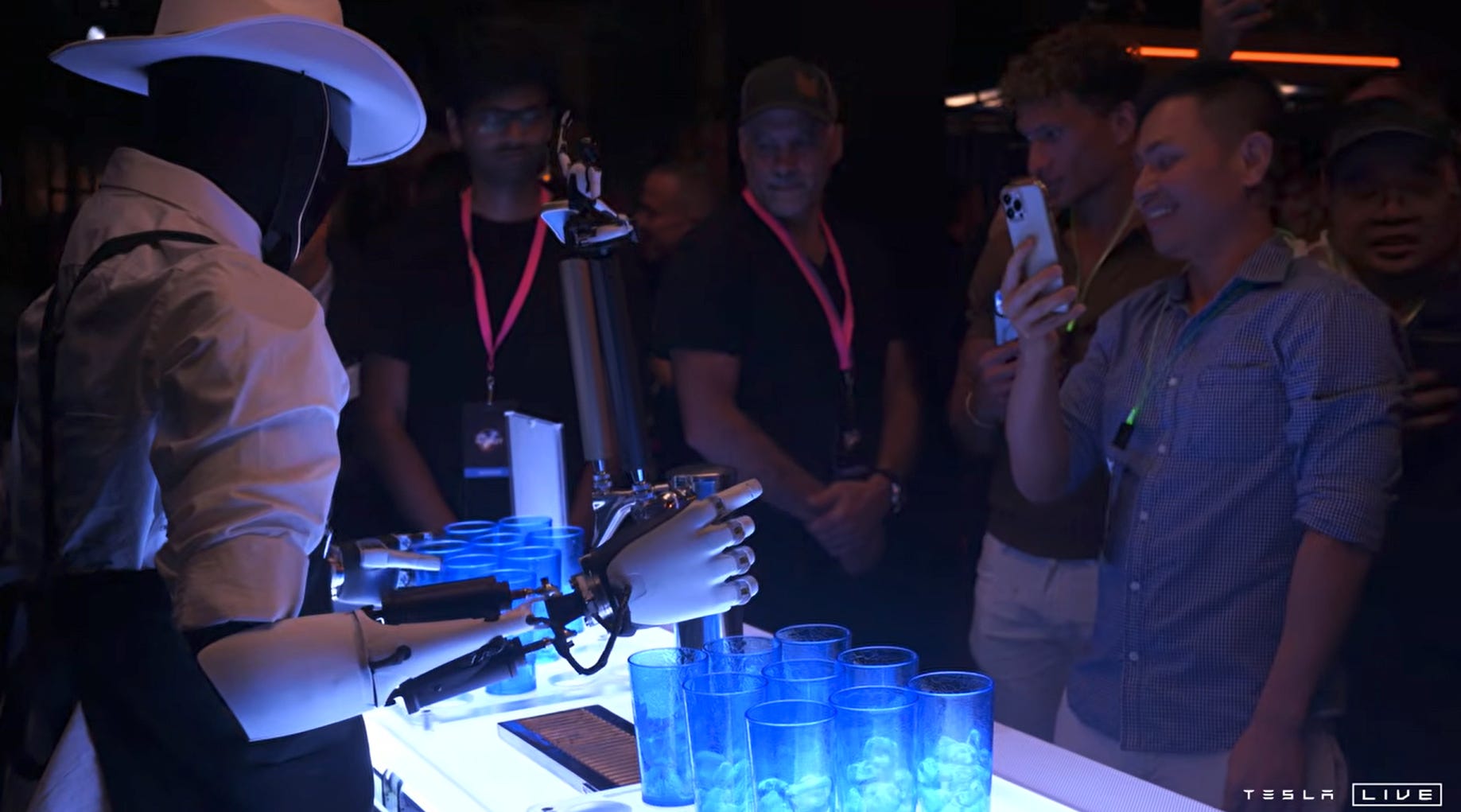
In October 2024, Elon Musk had several of Tesla’s Optimus robots serving drinks at an event unveiling Tesla’s new Cybercab.
“Optimus is not a canned video. It’s not walled off. The Optimus robots will walk among you,” Musk said at the event.
Then in February 2026, the Chinese company Unitree staged a stunning martial arts performance at the Spring Festival Gala in Beijing. A mixed cast of humans and humanoid robots carried out a perfectly synchronized, fluid dance routine. Robots performed spins, jumps, and even backflips.
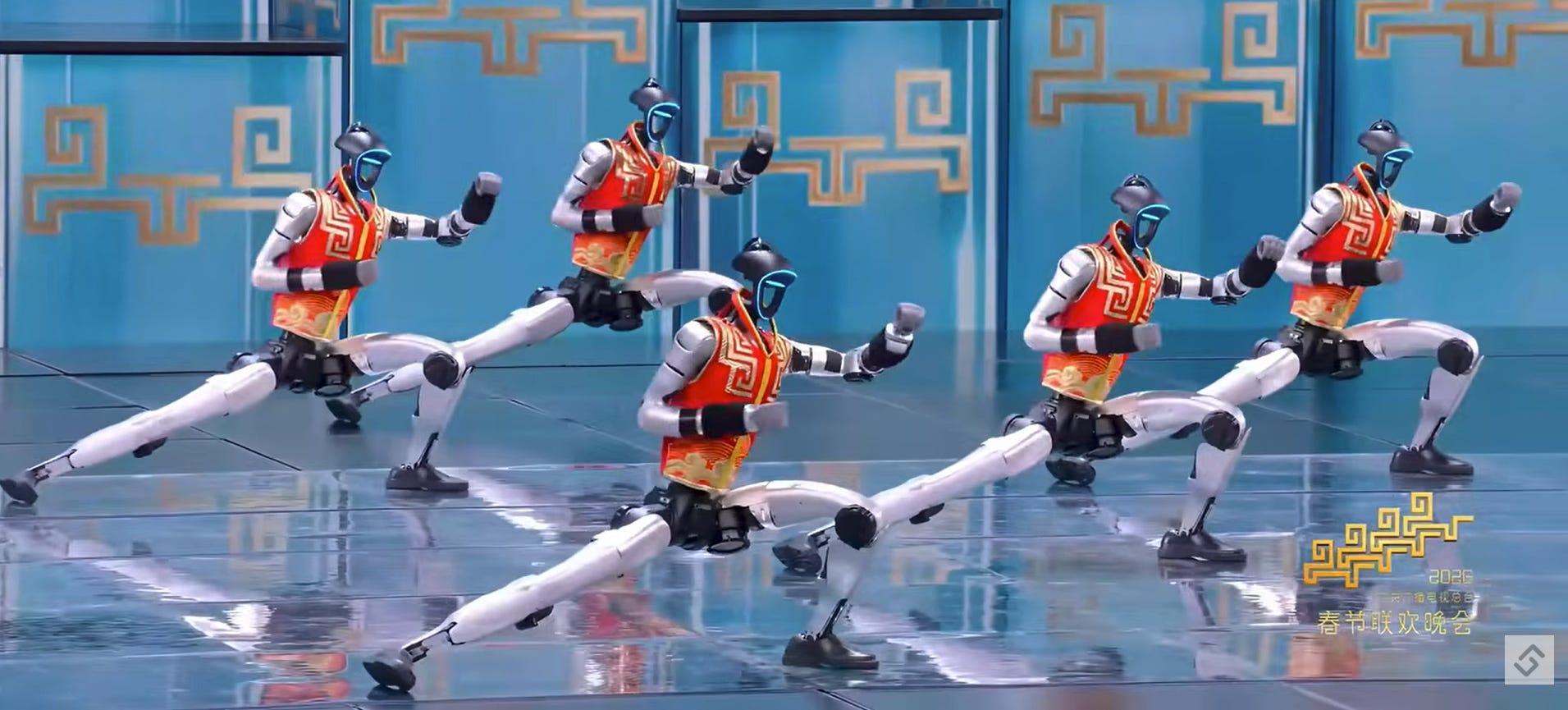
It was a big improvement over the 2025 show, which featured robots walking stiffly across the stage while waving handkerchiefs.
Just last week, at the 2026 World Humanoid Robot Games in Beijing, a robot ran 100 meters in 8.86 seconds, crushing Usain Bolt’s human world record of 9.59 seconds. At last year’s competition, the fastest robot took more than 20 seconds to run 100 meters.
Demonstrations like these have impressed a lot of casual observers — and created a lot of anxiety about future job losses. If humanoid robots can already serve people drinks, perform elaborate dance routines, and outrun humans, how long will it be before they put millions of people out of work?
But if you talk to robotics experts — and I’ve talked to many in recent months — a more nuanced picture emerges.
As Physical Intelligence co-founder Karol Hausman put it, people (including himself) “are not very good at judging progress in robotics or judging what is impressive and what isn’t.” Sure, robots can do acrobatic maneuvers that are “very difficult for a human to do,” he said. But then “something as simple as picking up a Coke can turns out to be very, very difficult.”
Some of the most impressive demos of humanoid robots involve someone controlling the robot remotely — a process known as teleoperation. It seems pretty clear this was the case with those Optimus robots in 2024, for example. Tesla’s hardware was sufficient to act as a bartender, but its software wasn’t up to the task. So Tesla apparently hired human operators to control the robots remotely.
And while those Unitree robots’ dance moves were not teleoperated, they don’t tell us all that much about the robots’ capacity to do useful work. Most physical labor involves manipulating objects in the real world — packing boxes, hammering nails, flipping hamburgers, and so forth. As we’ll see, training a robot on physical manipulation tasks like these is much harder than training a robot to dance.
There are also broader challenges that transcend individual tasks. For example, human workers are extremely flexible — they can perform a wide variety of tasks, and they can learn easily while on the job. So far, nobody has figured out how to give AI robotics models the same capacity for generalization.
Today’s most impressive robotics demos involve tasks that take humans several minutes at most. But human workers also perform tasks that take hours — things like “rebuild this car’s engine” or “assemble those kitchen cabinets.” Training a robot to complete longer projects requires building skills unnecessary in short tasks, like the ability to keep track of what’s already been done.
Then there are a lot of practical economic and safety concerns that will become obvious once we try to deploy robots in the real world. Robots will need to work for hours without breaking down. They can’t be too expensive to manufacture, train, or repair. They need to be extremely safe to operate in proximity to human beings.
It will take many years — maybe even decades — to overcome all of these challenges. So yes, humanoid robots have made a lot of progress in the last few years. But there’s still a long road ahead.
Sponsor message
Get career advice for having an impact in the age of AI from 80,000 Hours

We’re sponsored today by 80,000 Hours, a non-profit that helps early-career professionals make the most of their careers and have a positive impact on the future.
They think advanced AI could make this decade one of the most significant and challenging transitions in history, and that talented people can do a lot of good by working to make it go well.
They have a number of resources that could be valuable to Understanding AI readers: a podcast with in-depth interviews with experts, a job board with a ton of AI-related jobs, and even one-on-one career counseling. These resources are all free of charge. Please check them out.
Manipulating objects is hard
A key challenge in robotics is predicting how the outside world will react to a potential robot action. In this respect, dancing is simpler than most other tasks because (as Bracket Bot CEO Brian Machado told me) “the floor doesn’t do anything.”
But while acrobatic robots are impressive to watch, it’s not actually that useful for a robot to dance or do backflips. Most useful work involves interacting with objects that move and change in response to a robot’s actions.
“The really, really core unsolved problem in robotics that unlocks 90% plus of the value is manipulation,” Theophile Gervet, president of the robotics startup Genesis AI, told me.
Picking up an object doesn’t just change its location, it can also change its shape. And different objects respond in different ways that are hard to model in a general way. Think about the different ways that a pillow, a bag of chips, and a glass of water behave when they are picked up.
In September 2025, the roboticist Benjie Holson (formerly Google X, currently OpenAI) announced the Humanoid Olympics, a list of 15 manipulation tasks that he believed would require researchers to “push the state of the art” for a robot to be able to solve.
Most of them would be trivial for an eight-year-old child to perform. Three of the tasks involved opening doors. Another was to make a peanut butter sandwich given bread and a closed jar of peanut butter. Perhaps the hardest task on the list for a human to perform would be to peel an orange.

Even with tasks this easy for humans, it was an impressive accomplishment when — three and a half months later — the startup Physical Intelligence announced that it had successfully demonstrated 10 of the tasks.
Having a robot company “do basically almost all of them in the first three months is wild,” Holson told Scientific American.
But Physical Intelligence’s performance came with caveats.
The researchers taught the robot how to do these tasks by puppeting a robot over and over until they could fine-tune a model to complete the task. To turn a sock inside out, they trained on 176 successful examples, or around eight hours of data. They peeled so many oranges that the researchers told Holson that the “corner grocery probably noticed the increase in orange sales and the one guy at the company who really liked mandarins was getting pretty tired of them.”
The robot took four to 10 times longer than a human to complete almost all of these tasks — while only succeeding 52% of the time!
None of this is meant to dismiss Physical Intelligence: its result was a genuine accomplishment. But even on these fairly simple tasks, robots are still far from human-level performance.
And it’s still easy to find tasks that are straightforward for humans but entirely beyond the abilities of robots. In January, Holson released a new set of manipulation challenges. While these tasks are more difficult, they are still straightforward for most adults: make a bed, hammer a nail, catch an egg without breaking it.
One category of manipulation task in Holson’s new list is worth noting: those that take a long time. Many humans are able to complete physical tasks which take hours — such as putting a bed together or painting a room. But like current LLMs, robots today struggle to complete longer, many-part tasks.
Holson included two tasks he dubbed “long horizon”: taking out the trash from a home and making an egg sunny-side up. Neither task took longer than five minutes.
I imagine it will take a lot of work to extend the capabilities of robotics models past these several-minute tasks. Current robotics models only have a limited capacity to remember what actions they’ve previously taken — for instance, Physical Intelligence’s most recent model can remember up to 15 minutes using a method to compress its previous observations into text.1 Models also aren’t yet reliable enough to string tens or hundreds of diverse subtasks together.
When I asked Gervet about long-horizon tasks, he said he wasn’t worried about it. “I think the job of a robot foundation model company, whether it’s full-stack or not, is to build more low-level five- to 10-minute horizon tasks” rather than to completely solve robotic reasoning. He expects that general-purpose AI companies will solve long-time planning and execution.
But it’s not obvious that it will be possible to cleanly separate short-term tasks from longer-term planning. Often, as humans work on individual subtasks, we learn things that cause us to change our overall plan. A system where different models are responsible for long-term planning and short-term task completion may lack our capacity for real-time adaptation.
Robot Week special: get 25% off an annual subscription.
Generalization
Holson announced his second batch of challenges more than seven months ago. As far as I can tell, no one has announced a solution to any of them. Maybe that will change in the coming months. But even if manipulation capabilities increase dramatically, there is an important interlocking challenge: generalization.
Robot companies have figured out how to train a robot on a specific task by pouring tremendous effort into that one task. But most individual tasks where this type of high-effort approach makes economic sense have already been solved using conventional automation techniques. So a key bottleneck is whether robot capabilities can generalize to new environments without significant training data.
For instance, when I visited China in May, I saw a Galbot robot working in a pharmaceutical warehouse. Its task was to take boxes off the shelf one at a time and place them in a chute for delivery workers.
Despite the simplicity of the task, it took the robot around 40 seconds to put each item into the chute. (Galbot said that newer deployments are twice as fast.) Every time a new item was added to the warehouse, Galbot had to train the robot to be able to pick up that specific new item as well — though the company said it only takes five minutes of training.
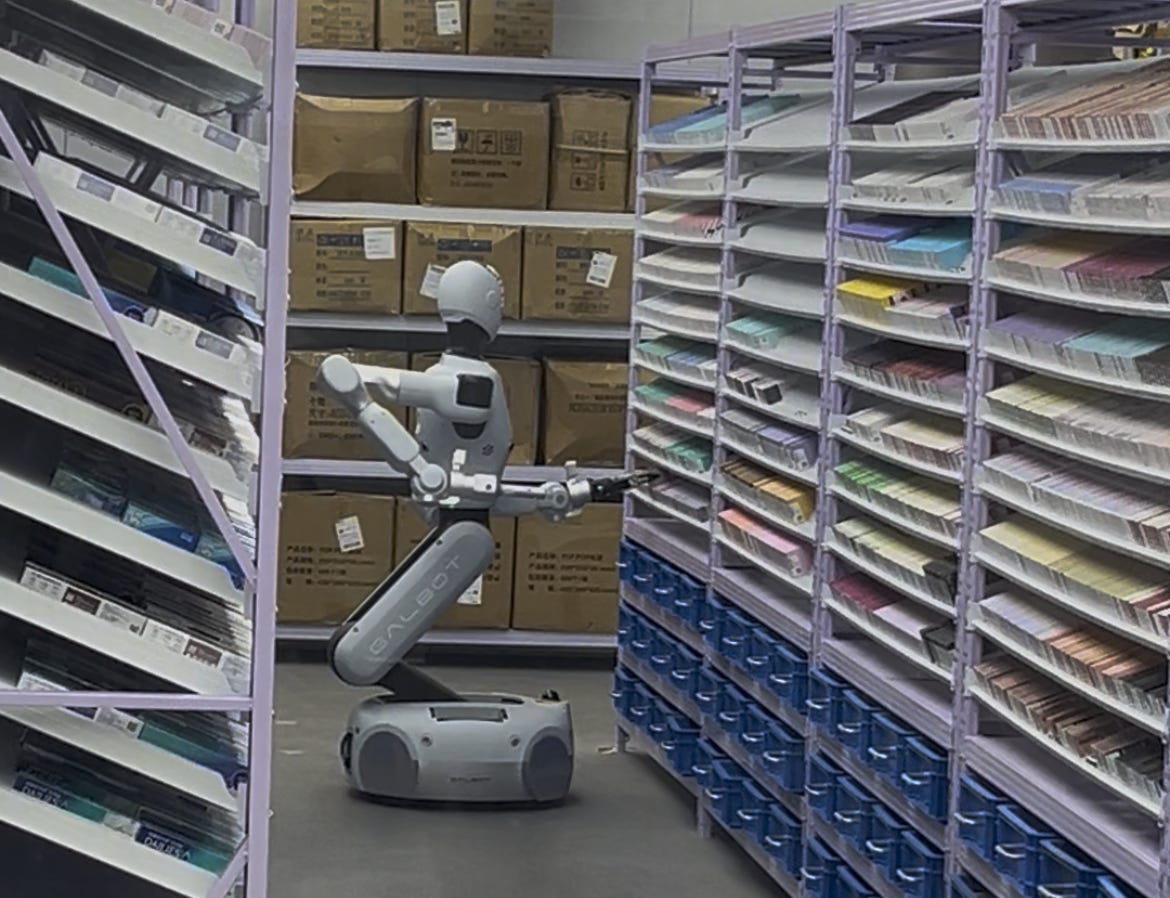
Basically every humanoid deployment today takes a similar approach. Companies choose a task with enough variability that traditional automation methods won’t work. But there can’t be too much variability, or else contemporary AI methods won’t work either.2 And each deployment typically requires a ton of setup and training effort.
Some startups expect that AI will make it easier to deploy robots across a broad variety of tasks. Jagdeep Singh, the CEO of Rhoda AI, told me that the company has “literally over 100 different use cases” in manufacturing and warehousing they’re working on bringing to deployment.
When I went to Nvidia GTC in March, several roboticists told me that the most impressive demo they saw was from a company called Generalist.
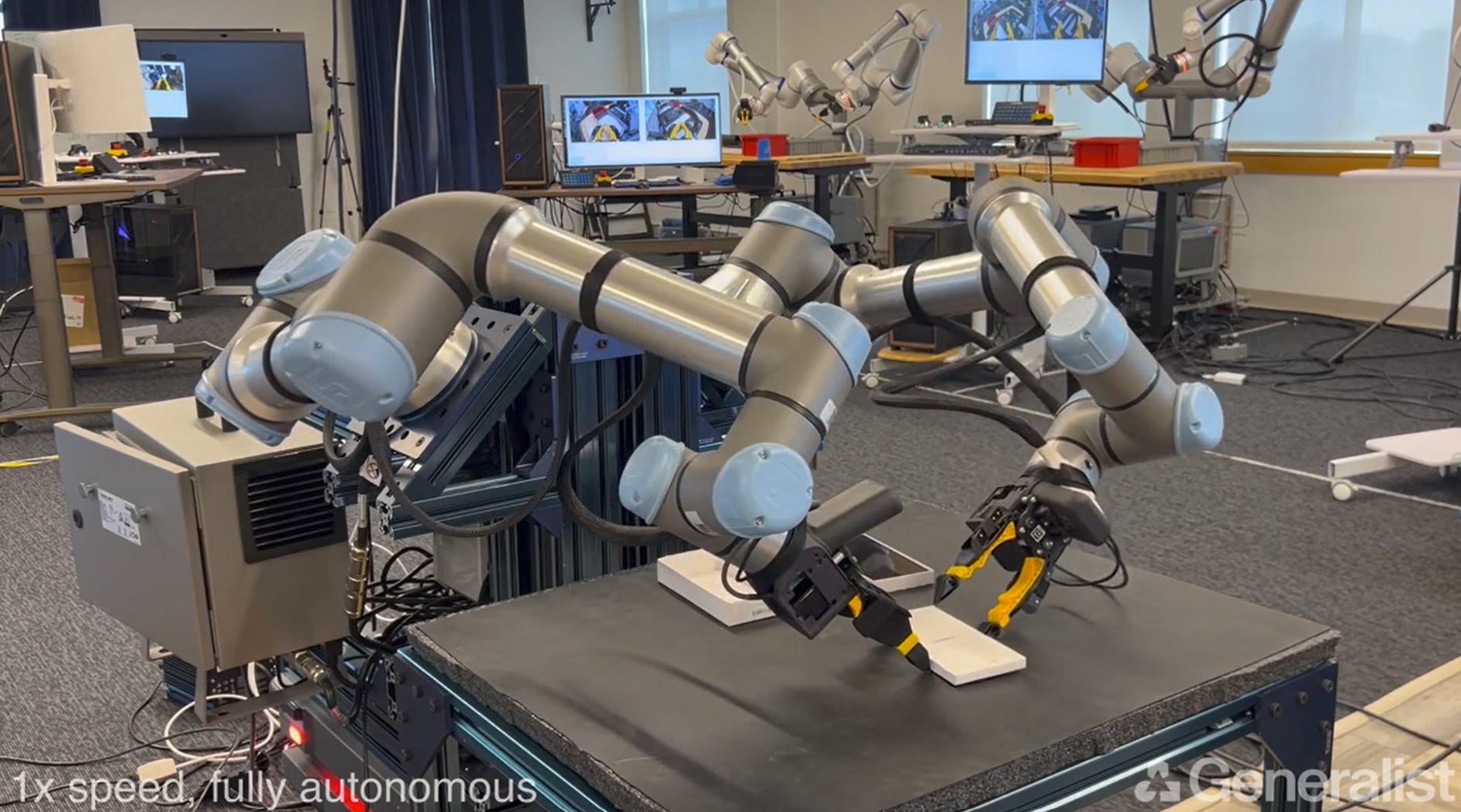
Generalist showed a robot inserting and removing a phone from its box using two robotic arms. While the task itself is pretty difficult for current robots, what impressed people the most was how little time and effort Generalist put into the demo. The company claimed that it only had a handful of days to prepare the demo and, notably, did not train the robot to do the task in the exhibit hall itself.
The fact that this impressed roboticists underscores how weak past models have been. Historically, many robotics demos have been extraordinarily brittle — for example, a change in lighting could cause them to fail.
While Generalist CEO Pete Florence told me that generalizing to a different background environment is basically “solved” today — at least for his company — there are other types of generalization that are still difficult. He gave me a hypothetical example: “Let’s say that you were trained to take one type of backpack that had a zipped opening and put a lunchbox into it, and then somebody gives you a different backpack and it has buckles.”
It’s unclear if current robots would be able to generalize to this new setting.
The state of the art in robot generalization is rapidly advancing. On August 20, Generalist announced that its latest model was capable of completing a new task from just one human demonstration. Last week, the startup Skild AI said that its model S1 could also complete a new task from a single video demonstration — on tasks up to ten minutes long.
A couple of companies have also publicly announced they will start deploying robots into homes — which are extremely diverse — by the end of 2026. But I expect that these deployments will be quite limited. And some of them are likely to rely heavily on teleoperation.
Legged robots are dangerous for now
I’ve focused thus far on challenges with general manipulation because it’s the biggest barrier to building useful robots, no matter the form factor. But humanoids aren’t just two hands manipulating objects: they also have legs to maneuver around.
Legs have engineering challenges of their own. The biggest one is safety.
Most current legged humanoids have to actively maintain balance. If, for whatever reason, the motors in the legs stop running, the robot will fall down, potentially injuring people in the process.3
And sometimes, the motors will stop running.
In 2025, researchers from Stanford and Simon Fraser University developed a system called TWIST that allows a human operator to control the full body of a humanoid by having the robot mimic the operator’s body position. The system worked well, but had a major limitation: overheating. The researchers wrote “our robot’s motors tend to overheat after 5 to 10 minutes of continuous operation, especially during tasks that require crouching, which necessitates cooling periods between tests.”
If the researchers ran the robot too long, it would shut down and collapse.
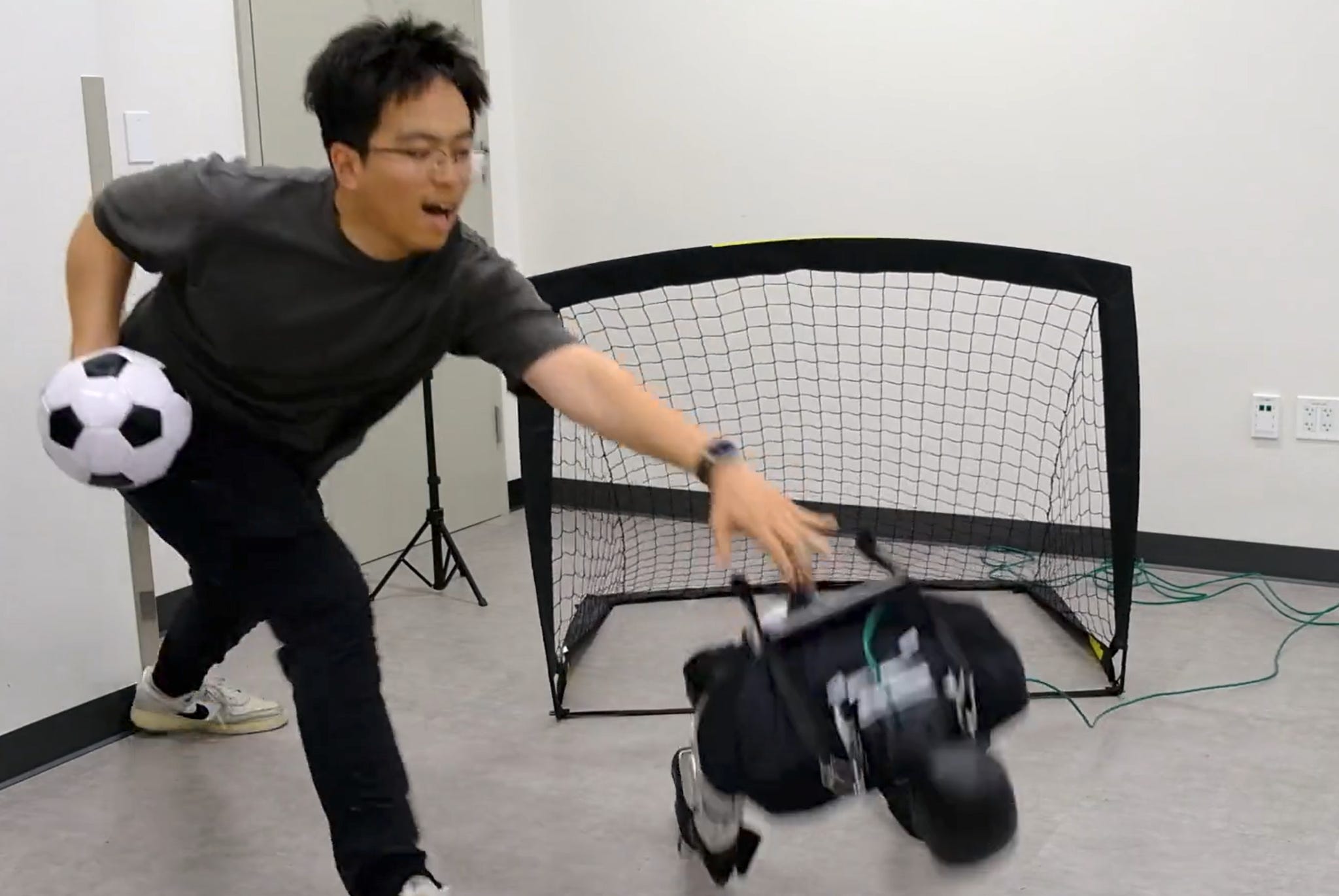
Overheating is a major challenge for Unitree’s G1, one of the most common humanoids in the world today.4 A year or two ago, a G1 “could carry a box of a couple kilograms for maybe five minutes at most. Then it would overheat, and you’d have to let it sit in the corner for 30 minutes — sometimes a full hour — before doing another five minutes,” according to Reyk Knuhtsen, robotics lead at SemiAnalysis, on a podcast in July. Unitree has improved the G1’s design, but heat is still a challenge. Knuhtsen said that operators can now get five to 15 minutes of work with 10 minutes of rest.
But overheating isn’t the only reason a humanoid robot might fall over. A robot’s battery might unexpectedly die, as might have happened with Tim’s robot dog. Or there might be a subtle design flaw that only pops up deep into large-scale deployment.
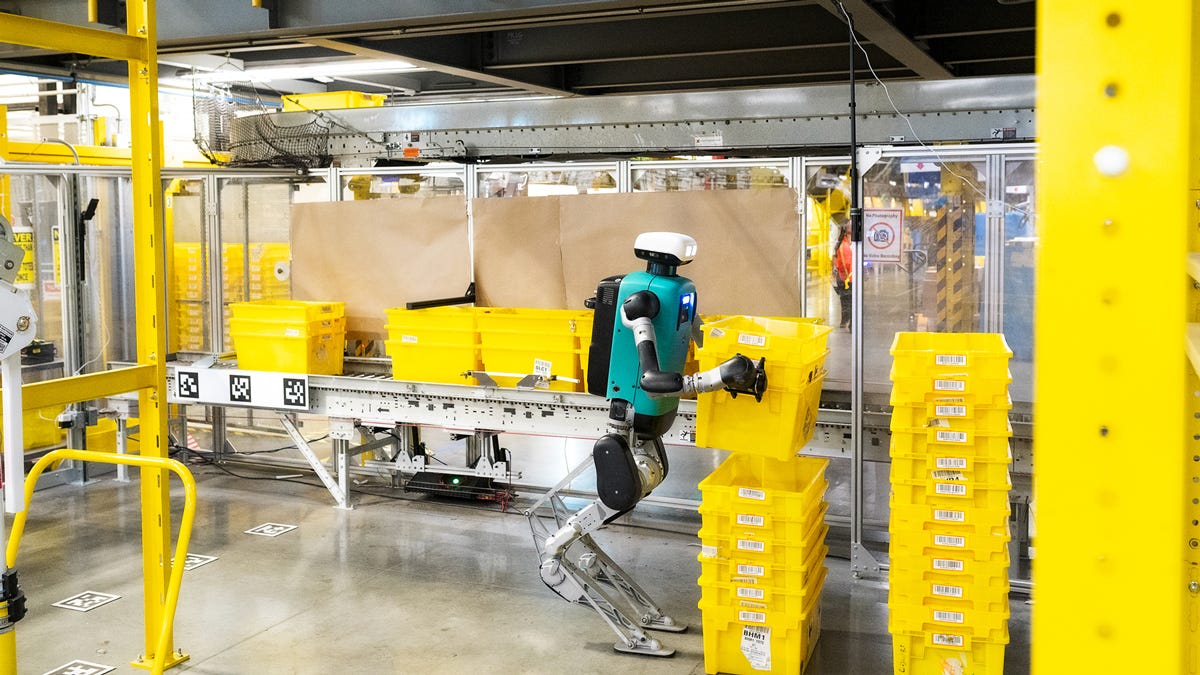
The CTO of Agility Robotics, Pras Velagapudi, told me that at one point, Agility faced a perplexing failure. A few robots that had been out in the field for a while suddenly started having a problem. When a robot crouched, one of its legs would fail and the robot would fall over. If the robot stood back up, however, it would work fine.
It turned out that in the legs, “there was a particular printed circuit board which was flexing over time,” Velagapudi said. Eventually, crouching would disconnect one of the cables. Straightening the leg would push it back in. This was a very subtle issue that only arose after thousands of steps.
To prevent failures like these from endangering humans, companies have to make careful design and deployment decisions.
Agility currently keeps its deployed humanoids in safety enclosures away from human workers. The company plans to allow its humanoids to work around humans soon by having the robot slow or stop its movements whenever a human gets too close.
Other companies have instead restricted their robots’ designs. For instance, 1X, which aims to put legged humanoids into home environments by the end of the year, has designed its robot to be light and mechanically compliant to reduce the risk of injuries if the robot does fall. Nevertheless, 1X told the Wall Street Journal that families with young children won’t be able to participate in its testing program later this year.
Another popular choice is to use a wheeled base instead of legs. Wheels are less expensive to engineer and manufacture. They are also passively stable, meaning the robot won’t fall over if it loses power. But wheels are also a lot less versatile — they can’t go up stairs or move through uneven terrain.
Ultimately, I expect that companies will figure out how to make legged robots safe and useful at scale. But these are tricky engineering challenges that don’t necessarily benefit from quicker AI progress.
The long road to full-scale deployment
Agility’s experience with mysteriously failing robotic legs is a perfect illustration of a broader point: turning a working demo into a broadly deployed robot is incredibly difficult.
“I have rarely seen a new technology that is less than ten years out from a lab demo make it into a deployed robot,” legendary roboticist Rodney Brooks wrote in 2024. “It takes time to see how well the method works, and to characterize it well enough that it is unlikely to fail in a deployed robot that is working by itself in the real world.”
So it will probably take a while to turn today’s impressive demos into shipping products.
We’ve seen this story before. “Right now, in learning for robotic manipulation, it feels like it felt in 2015 in self-driving cars,” the roboticists Stefanie Tellex and David Watkins wrote in a recent blog post.
In the mid-2010s, dozens of startups flooded into self-driving cars and quickly achieved impressive demos and test deployments. It really seemed like companies might be able to “solve” self-driving within a few years.
In 2015, Chris Urmson, then head of Google’s self-driving project (which later became Waymo), gave a talk where he said, “My oldest son is 11, and that means in four and a half years, he’s going to be able to get his driver’s license. My team and I are committed to making sure that doesn’t happen.”
The next year, Ford announced it would mass-produce a car without a steering wheel by 2021. Lyft’s president John Zimmer predicted that “within five years a fully autonomous fleet of cars will provide the majority of Lyft rides across the country.” He added that by 2025, driverless taxis would become so cheap and ubiquitous that “owning a car will go the way of the DVD.”
A decade later, Waymo has active robotaxi deployments in 11 cities, but you still can’t buy a fully self-driving car or access one outside of a few urban environments.
It turned out that there is much more to scaling robotaxis than just making a car that drives itself most of the time. While Waymo has broadly succeeded at making a self-driving car that crashes less than human drivers (at least within its operational environment), there are still a huge number of barriers to actually scaling its deployment, from legal pushback to the challenge of actually procuring and maintaining a robotaxi fleet.
Perhaps the biggest challenge is that there are an enormous number of edge cases in the real world that are very difficult for autonomous vehicles to understand and deal with appropriately.
Humanoid robots won’t face exactly the same deployment challenges as autonomous vehicles. For example, a mistake by a humanoid robot may be less likely to kill someone. But a lot of the same bottlenecks apply to both types of robots. The real world is extraordinarily complicated, and it takes a huge amount of effort to go from demonstrating a capability to deploying it at scale.
Historically, a robot’s sticker price has been well under half the total cost of deploying it. While the AI methods we’ve covered above will help lower the cost of new deployments by making robots more general, they have their own challenges, especially around debugging neural network failures.
This doesn’t mean that the AI methods being developed today aren’t important. “There is a real breakthrough,” Tellex and Watkins wrote in their essay. Many problems that seemed basically impossible five years ago — like having a robot fold a shirt — are mundane today. The videos of Unitree’s dancing robots reflect massive progress in robotics hardware and training techniques.
But there’s still a long road ahead from impressive videos to ubiquitous, useful robots.
Robot Week special: get 25% off an annual subscription.
Unlike with LLMs, robotics models can’t just use their context window as a memory system. Robotic sensors create a lot of data — up to a terabyte a day — so developers need ways to compress past sensor observations into usable memories.
Indeed, as Chris Paxton notes, a substantial proportion of humanoid deployments fall into four categories: rigid or semi-rigid pick and place, package reorientation, box packing, and clothes folding.
I’m unsure whether overheating is specifically a Unitree issue, or whether other robot designs have this problem. On the one hand, Unitree is probably the most popular company for researchers buying humanoids, so we know much more about the limits of its hardware than of its competitors. (And other companies have occasionally referenced heating challenges.) But Unitree also optimizes heavily to make cheap robots, so the quality of components is lower, potentially exacerbating heating issues.
Really sober view, loved it!
Legged, free-moving robots have few advantages over a single robot arm bolted to a floor (basically, mobility) and most of that advantage can be achieved more simply from adding wheels. Meanwhile a stationary robot arm can be hooked up to power, servers, is much simpler to build and repair (and thus you can have more of them) is more compact (see above parenthetical), and can even be trained on less data.